Introduction
Lifestyle Hub Aarhus is a creative community and meeting place for entrepreneurs, designers, brands and companies working within fashion, furniture, retail and other creative industries. Located in Aarhus Sydhavn, one of the city’s emerging creative districts and run by Aarhus Lifestyle and Design Cluster, the Hub brings together approximately 40 people under one roof. It connects a broader network of creative professionals, knowledge institutions, and commercial partners.
The ambition of Lifestyle Hub Aarhus is to help creative entrepreneurs succeed while encouraging them to adopt circular principles, circular business models and new forms of collaboration. Through exhibitions, events, network meetings and hands-on circular projects, the Hub has become a place where circular ideas are translated into tangible products, partnerships, and business opportunities.
About the organisation / partner / neighbourhood
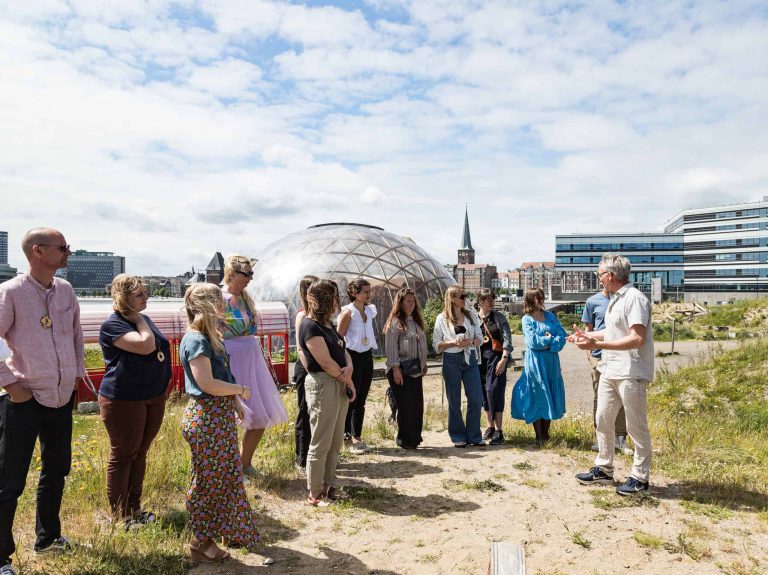
Lifestyle Hub Aarhus is situated in Aarhus Sydhavn, a rapidly developing creative district in the southern part of Aarhus. The area brings together creative education, design-oriented businesses, hotels, photographers, music venues, restaurants and Filmby Aarhus. The district combines creativity with an ambition for growth, entrepreneurship, and new opportunities.
Around 40 people are based at Lifestyle Hub on a daily basis, representing a diverse mix of:
- Fashion brands
- Furniture producers
- Circular furniture retail
- Designers from different disciplines
- Creative entrepreneurs
Beyond the permanent community, Lifestyle Hub acts as a meeting place for a much broader creative ecosystem in Aarhus. Local and national knowledge institutions regularly engage with the Hub to explore its activities, partnerships and approaches to circularity.
The Challenge
Creative entrepreneurs and small companies often have strong ideas and ambitions, but lack access to the networks, knowledge, partners and support. At the same time, circularity can be difficult to translate from an ambition into concrete products and business models.
Additionally, creative talents, commercial companies and knowledge institutions do not always have natural spaces in which to meet and collaborate and be supported.
Lifestyle Hub therefore created a physical and professional environment that could:
- Bring creative entrepreneurs together under one roof
- Help entrepreneurs develop and grow their businesses
- Encourage and support the use of circular business models
- Connect creative talent with established commercial companies
- Demonstrate tangible examples of circular design and production
- Create a meeting place for knowledge-sharing, networking, and collaboration
- Put successful circular initiatives and role models on stage
The Solution
Lifestyle Hub has developed a combination of community-building, knowledge-sharing, exhibitions, events and practical circular projects. Through funding from the Creative Circular Cities project, the Hub was able to allocate additional human resources to amplify its support to the community.
A permanent creative community
Approximately 40 creative professionals and entrepreneurs are based at Lifestyle Hub. Bringing different disciplines together creates opportunities for informal knowledge-sharing, new collaborations and business development.
Making circularity visible
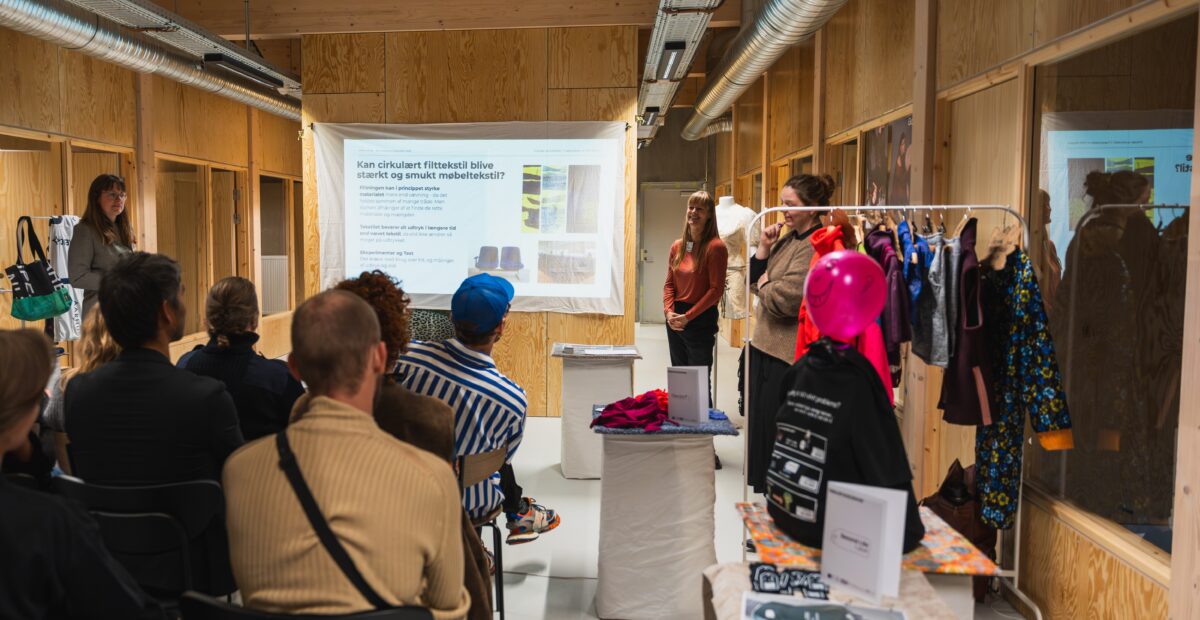
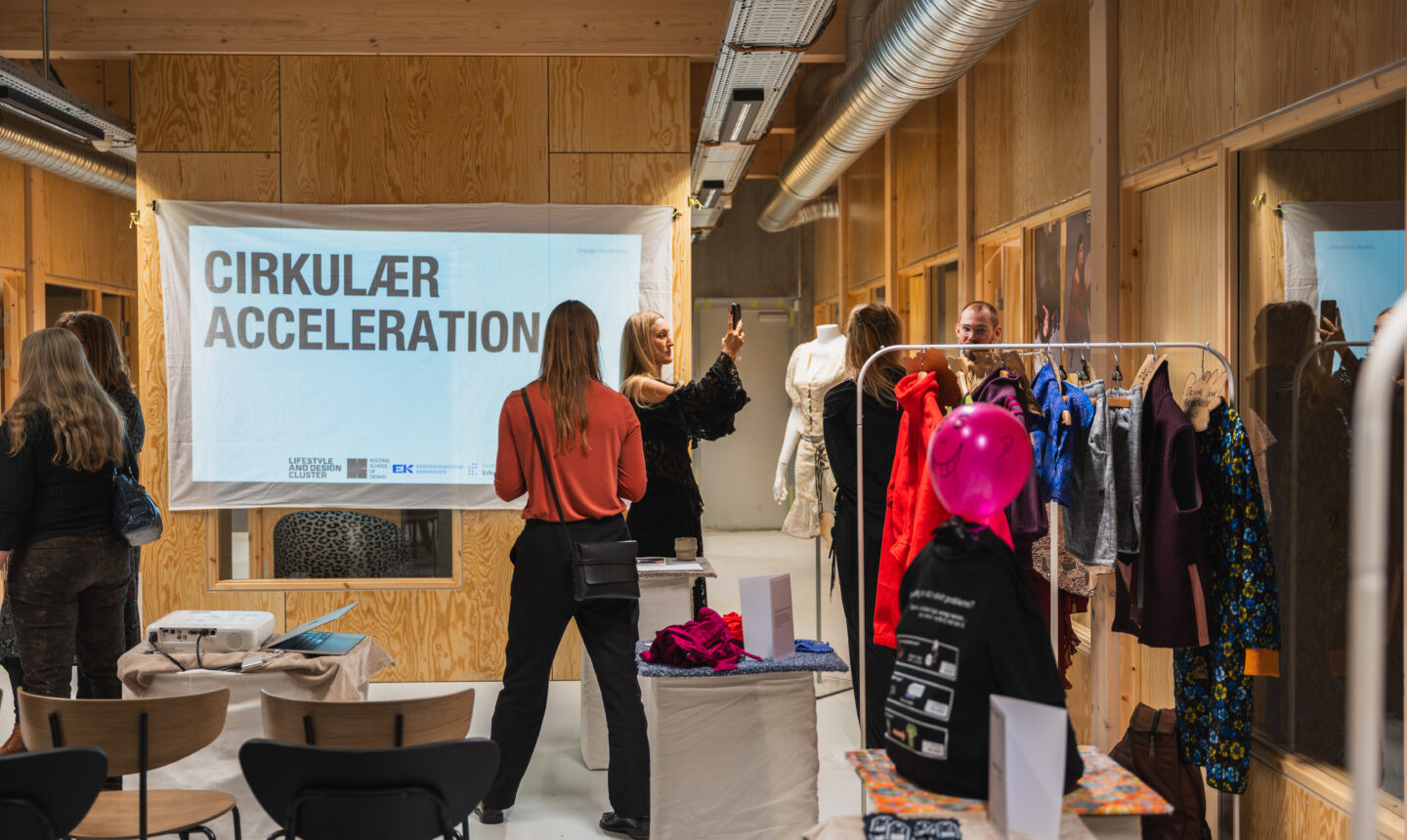
Lifestyle Hub continuously hosts exhibitions that demonstrate how residual materials can be given new value. Examples include:
- A permanent exhibition demonstrating how textile waste can be transformed into artworks, making circularity tangible.
- A project where furniture students worked with residual materials from a Danish furniture manufacturer to create a series of conference stools. These stools are now used at Lifestyle Hub events, showcasing how production leftovers can become functional and attractive new furniture.
Building networks and sharing knowledge
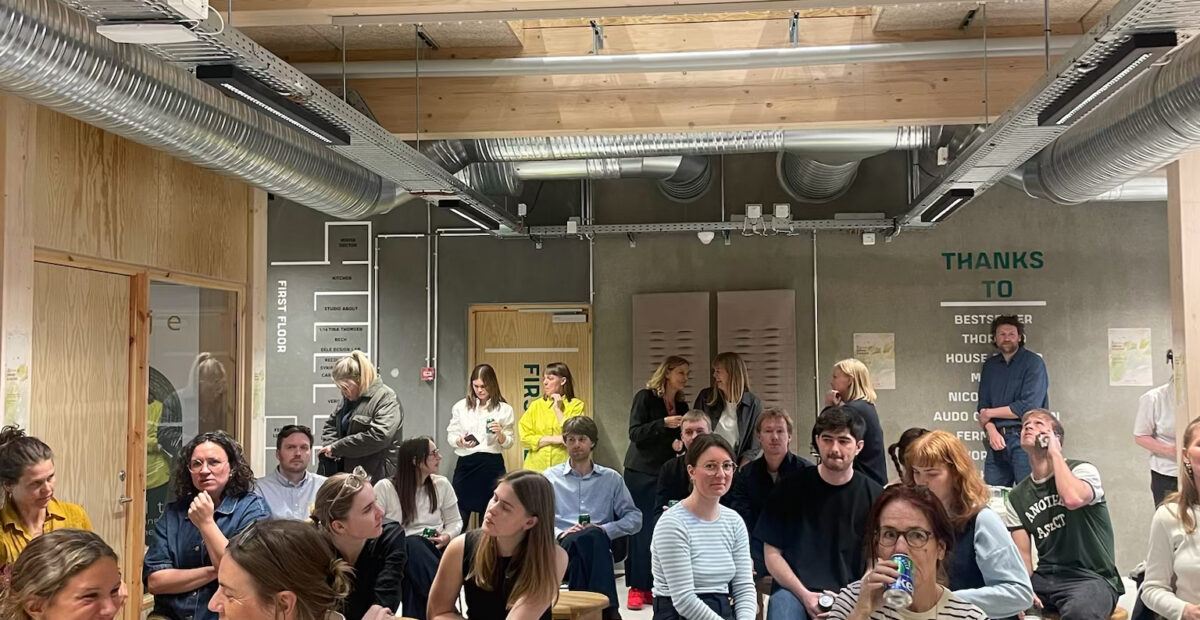
Lifestyle Hub hosts recurring network meetings through a design network that brings together around 70 participants for talks and discussions every other month. Themes range from the circular homes of the future to broader topics within design, business development, and sustainability. These meetings strengthen relationships across the creative ecosystem and give entrepreneurs access to new perspectives, expertise, and potential partners.
Connecting education, creativity and business
An important part of the approach is to create collaborations between creative students, educational institutions, and established commercial companies. One example developed as part of Creative Circular Cities brought together:
- Salling Department Store, providing leftover textile materials
- Two creative students from VIA University College
- Lifestyle Hub / Creative Circular Cities
- Domen in Aarhus, providing an exhibition platform
The students used Salling’s residual textile materials to develop new fashion collections. The resulting pieces were exhibited at Domen in Aarhus and were subsequently sold in the Salling Department Store as high-end products. The project demonstrated an entire circular value chain: from residual material, through creative transformation and public exhibition to a commercially relevant product.
The Results
The Creative Circular Cities project provided funding to expand the Hub’s capacity, enabling dedicated human resources to scale its initiatives. Lifestyle Hub has developed into an established meeting place for creative entrepreneurs, designers, companies and knowledge institutions in Aarhus. Key results include:
- Approximately 40 creative professionals and entrepreneurs based at Lifestyle Hub
- A recurring design network reaching around 70 participants per meeting
- Ongoing collaboration with local and national knowledge institutions
- Regular exhibitions presenting practical examples of circular design
- New furniture created from residual materials and used as permanent infrastructure at Lifestyle Hub
- Circular fashion collections created from Salling’s textile leftovers
- Collaboration between commercial partners and students from VIA University College
- Public exhibition of circular products at Domen in Aarhus
- Circular products subsequently brought into a commercial retail setting at Salling Department Store
Success is not only measured through direct commercial outcomes, but also through the strength of the community, the number of collaborations created and the ability to turn circular principles into tangible examples that can inspire others.
Key Takeaways
Lifestyle Hub shows the value of creating a physical place where creative entrepreneurship, business development and circularity can meet and get the necessary guidance and support. A key success factor has been the combination of different actors: creative entrepreneurs, students, knowledge institutions and established commercial companies each bring different capabilities, resources and perspectives. By bringing them together in practical projects, circularity becomes more than a theoretical ambition.
Support from the Creative Circular Cities project allowed the Hub to invest in human resources, fostering greater engagement and activity.
The Hub also demonstrates the importance of making circular solutions visible. Exhibitions, events, and physical products allow visitors and businesses to see what is possible when residual materials are treated as resources.
The approach has the potential to be replicated in other cities and creative districts. A similar model could create value wherever there is a combination of creative talent, educational institutions, commercial partners and an ambition to accelerate circular business models.
More about the Hub: https://ldcluster.com/en/projects/new-lifestyle-house-in-aarhus/