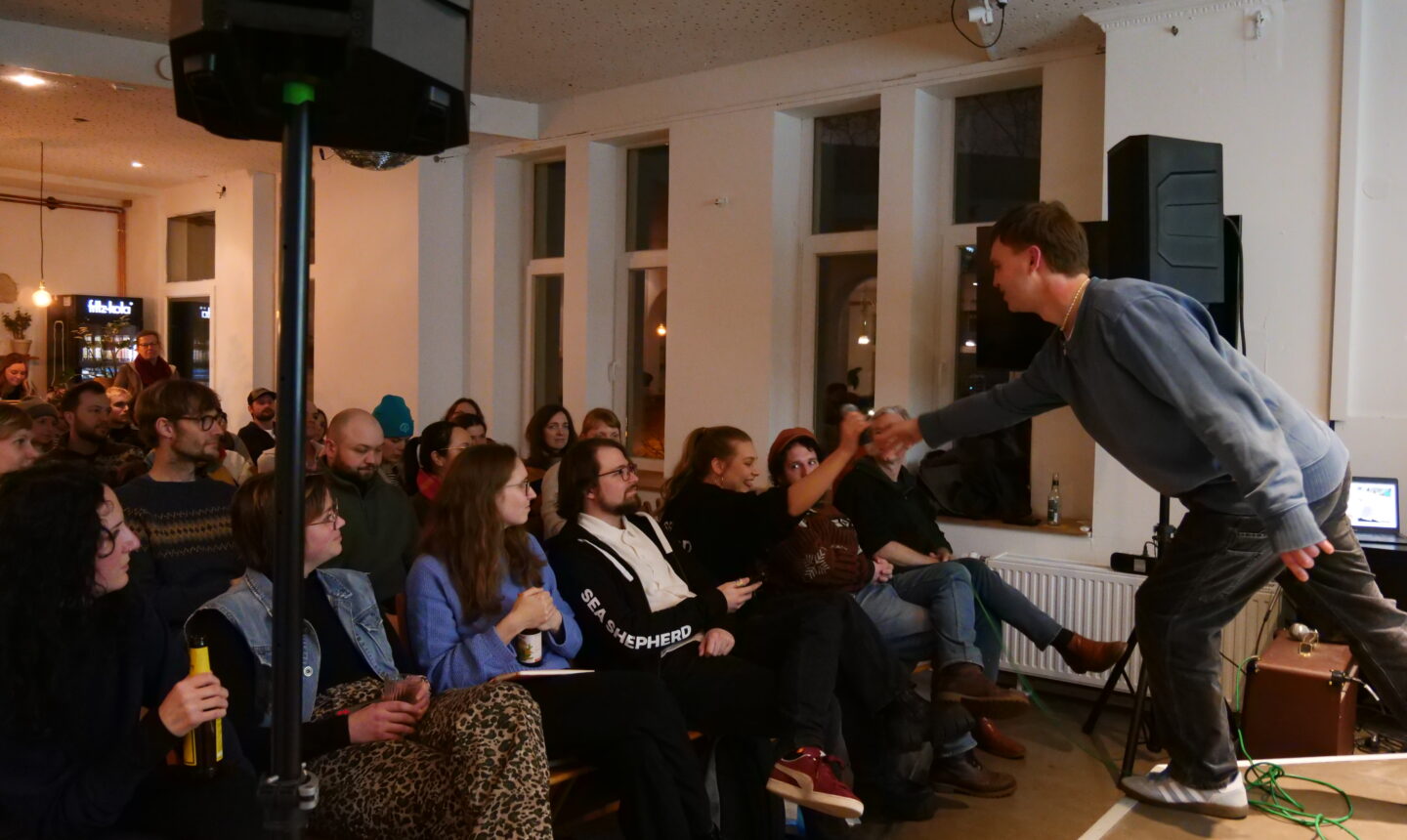
On February 11 2026, the Cobl in Kiel was transformed into a stage for the circular economy in action: The “Circular Stories” storytelling event focused on personal experiences and concrete ways to take action. People from various fields shared how they practice resource conservation in both their personal and professional lives and the approaches they take to do so.
Charlotte Winter from the Environmental Protection Agency spoke about her Sisu project, which was intended to become an intergenerational textile repair network and a place for people to connect. Due to the pandemic, the initiative evolved into an exhibition on textile waste. She also demonstrated how she continues to pursue her passion for repair in professional contexts by working on the city’s Zero Waste project, where, among other things, she facilitates networking among Kiel’s repair initiatives. Jan-Niklas Kirchheim linked the presentation of the “seagrass monster”—which many people shy away from on the beach—with the production of stuffed animals in the Meergut project, which uses seagrass as filling material.
Artistic perspectives were not neglected either: Greta Magyar began creating prints in Rome using everyday materials and trash for financial reasons, achieving surprisingly creative results. Daniel Holk and Timo Milke from the Werkstatt Konsum demonstrated how 18th-century imported pine wood—which would otherwise have been wasted—can be transformed into new objects. Antonia Kirner spoke about her work with Sea Shepherd, in which ghost nets are recovered from the Baltic Sea and turned into durable jewelry—a material that takes over 750 years to decompose.
The evening was rounded out by Jessica Krahl, who supports the Waterkant Festival and consistently promotes zero waste there. Through collaborations, such as with Trash Galore, materials from the stage of the OMR Festival in Hamburg were given a second life as bleachers at the Waterkant Festival.
The storytelling evening made it clear: sustainability and resource conservation thrive on personal stories. They show that everyone has room to act in their daily lives, at work, or in volunteer work—and that change can be tangible, creative, and inspiring.