How can local communities encourage municipalities to take meaningful action towards a circular economy? CCC project partners in Kiel – Anscharcampus, Heinrich-Böll-Stiftung Schleswig-Holstein and Zero Waste Kiel – developed practical guidance demonstrating how an open letter can be used to influence local decision-making and build public support for circular policies.
The guidance outlines four key steps for an effective open letter campaign: defining a clear policy goal, crafting a fact-based and solution-oriented message, building credibility through broad community support, and ensuring wide dissemination through public platforms, social media, and direct communication with policymakers.
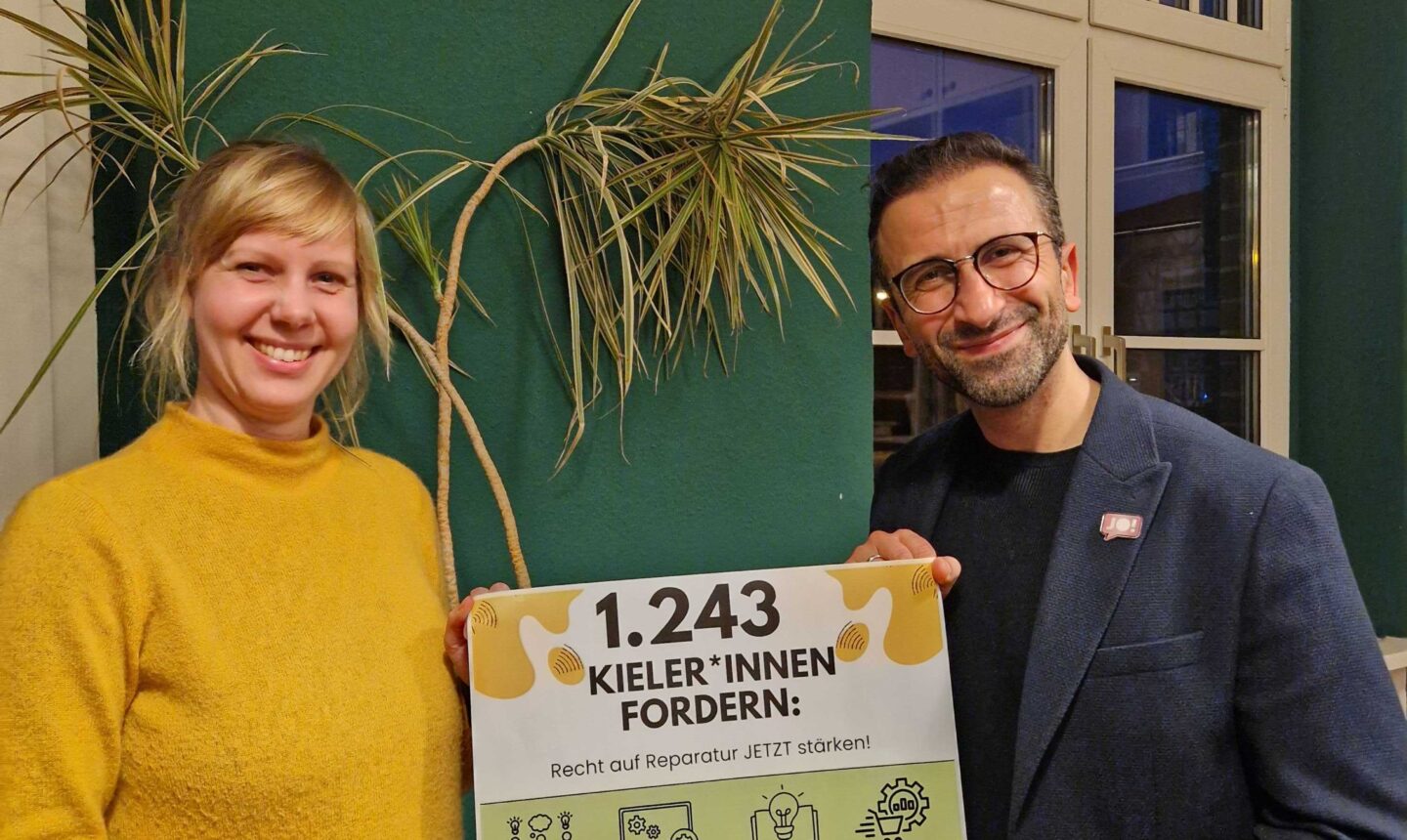
Putting this approach into practice, the Kiel partners launched an open letter calling on the city to strengthen the Right to Repair. The initiative responds to a pressing global challenge: according to the Circularity Gap Report 2025, only 6.9% of the materials used worldwide each year come from recycled sources. Strengthening repair and extending product lifetimes are therefore essential steps towards reducing resource consumption and supporting a more circular economy.
The campaign calls on the City of Kiel to establish repair centres as local hubs for repair services, education, and knowledge exchange; improve access to reusable devices at recycling centres; integrate repair into public procurement; and introduce repair projects in schools. These measures are aligned with the objectives of the EU Green Deal, the EU Circular Economy Action Plan, and recommendations from Germany’s Runder Tisch Reparatur network.
Supported by more than ten civil society organisations, the campaign combined an online petition with coordinated social media outreach and cross-promotion by partner organisations, demonstrating strong local commitment to making repair a central part of Kiel’s sustainability agenda.
The guidance and case study show that open letters can be much more than advocacy tools—they can bring together citizens, organisations, and policymakers around shared goals and inspire concrete local action.