Over the past three years, the Baltic Sea Region fostered collaborations between six municipalities involved in the European project Creative Circular Cities: Kiel (DE), Aarhus (DK), Turku (FI), Tallinn (EE), Riga (LV), and Gdynia (PL). The purpose was to explore how creative industries, communities and local authorities can rethink the way we relate to our available resources. From restoration workshops to intensive courses for students and businesses, the project provided frameworks for experimentation and knowledge sharing towards a more sustainable, circular economy in the cities and in the region.
Currently, the EU’s circularity rate stands at approximately 12%, meaning that nearly 88% of materials used in Europe still come from virgin resources – a figure that underlines how fundamental regional collaboration and national policies are in the process of transitioning from extraction-based economies to regeneration. The urgency of a systemic approach to circularity is further emphasised by current consumption behaviours: humanity is consuming ecological resources about 70 to 80% faster than ecosystems can regenerate them; global material consumption exceeds 100 billion tonnes annually, and only a small fraction of those materials return to the economy as secondary resources. In the absence of joint efforts to scale circular economy practices, the demand for natural resources could increase by another 60% by 2060.
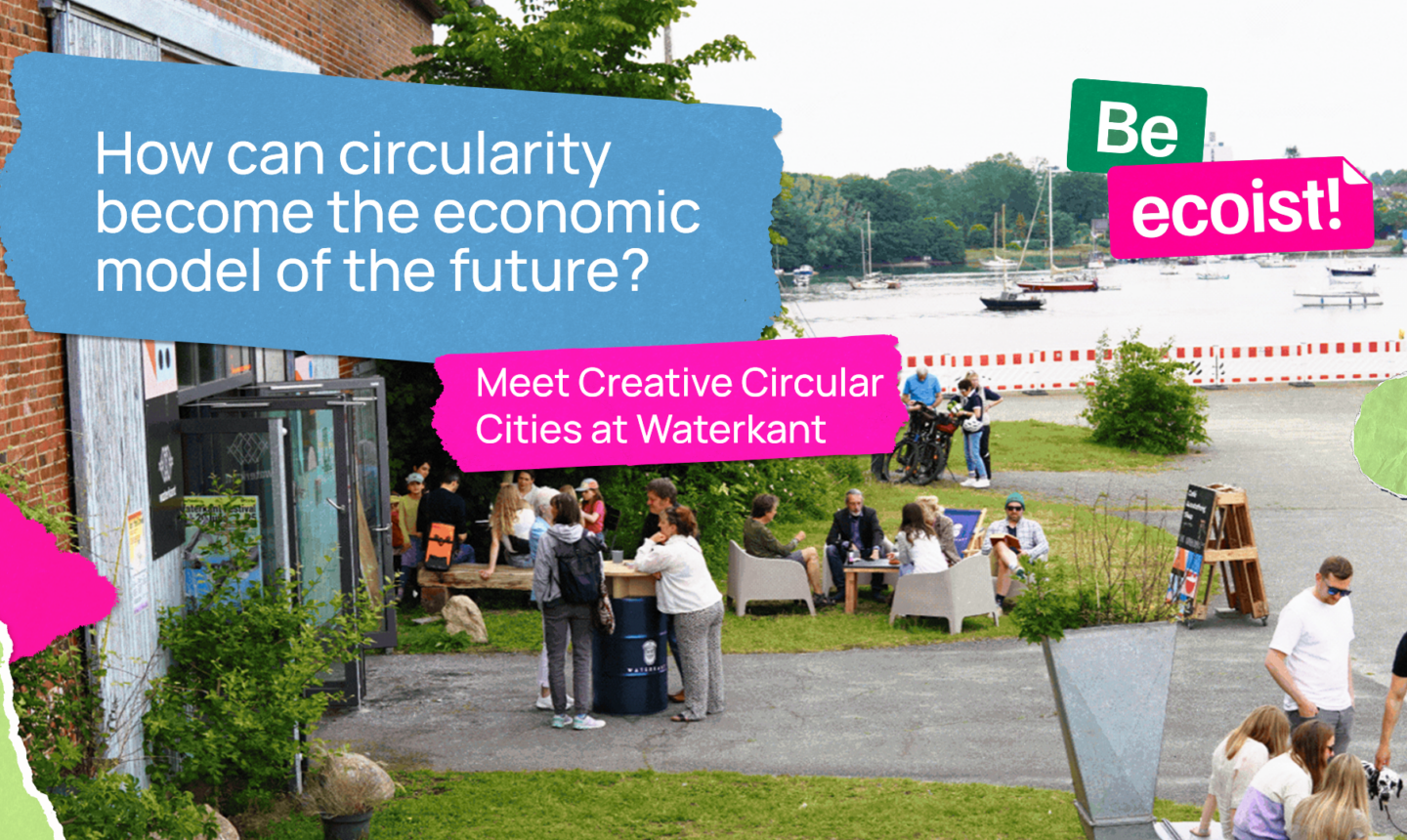
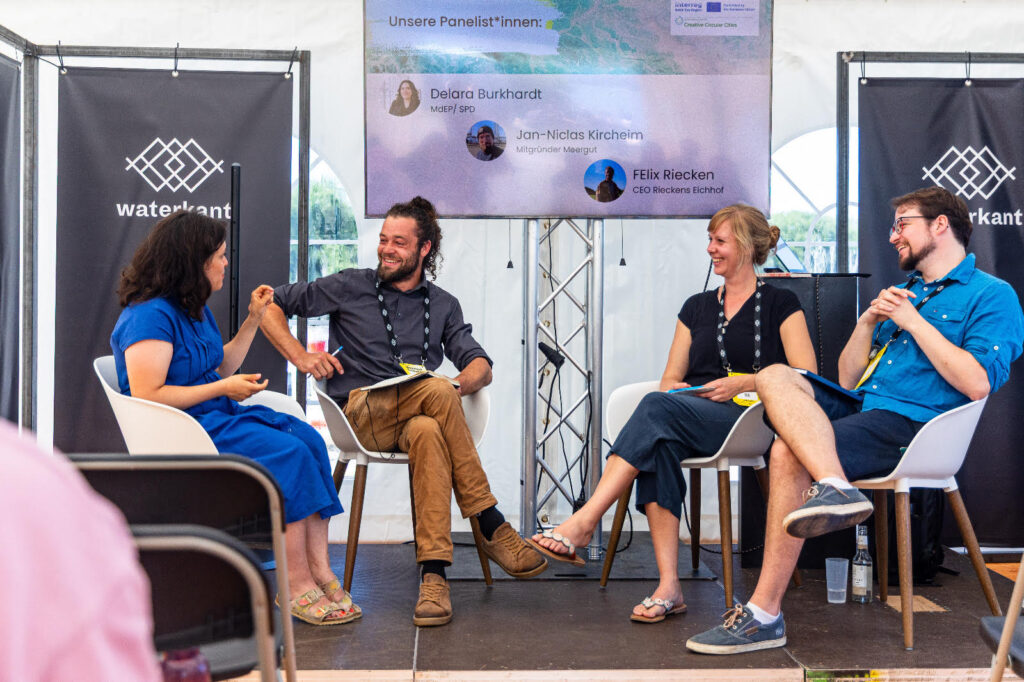
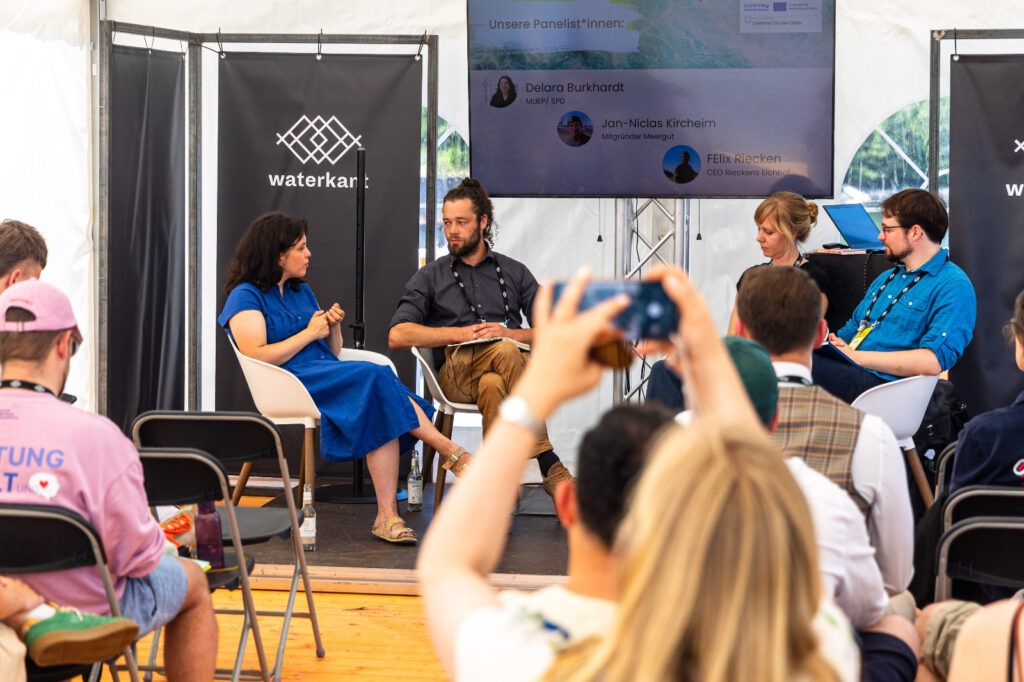
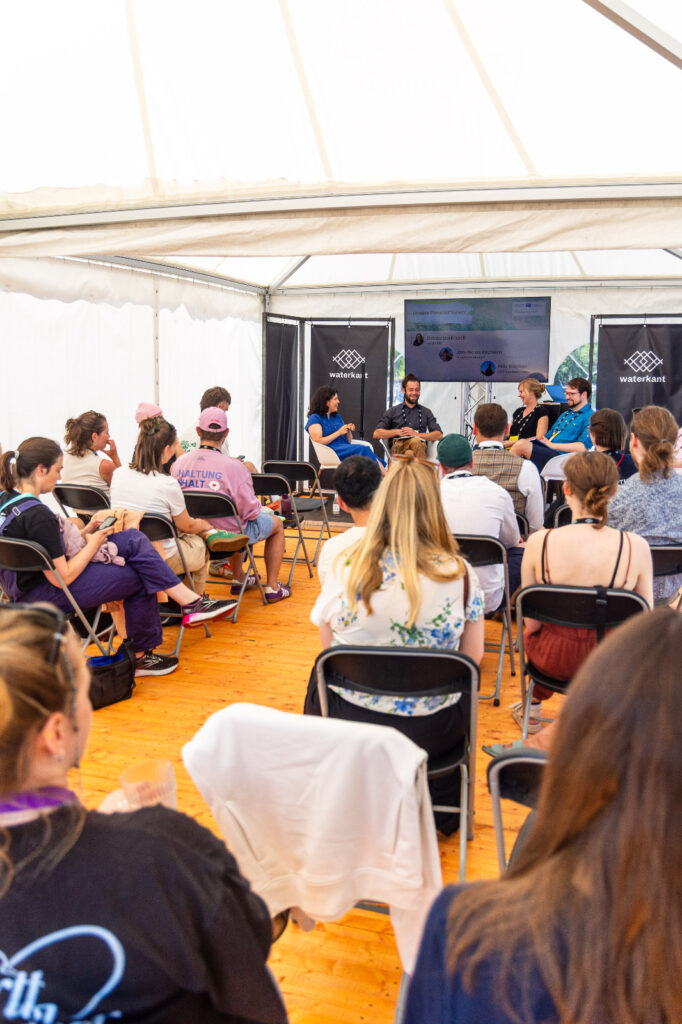
This is exactly the gap Creative Circular Cities was designed to address at a regional scale. On 19 June, at 13:00, during Waterkant Festival, representatives of the local project partner Anscharcampus and circular experts from business as well as policy will discuss pilot initiatives and their learnings that allowed municipalities, citizens, and designers to think and act about their environments differently: as living spaces where products and resources can transform and change, being reused, repurposed, and continuously returned to the productive cycle.
One such example was developed in Kiel, through a five-day intensive course dedicated to students from the Industrial Design department at Muthesius University of Fine Arts and Design. Goldmine gave students the opportunity to work with metallic waste from the scrap trade and develop new product ideas from discarded material.
“The circular economy is not only an ecological necessity – it is also an economic opportunity, and cities are uniquely positioned to lead this transformation. Through Creative Circular Cities, we are seeing how local action, when connected across borders, can begin to change the logic by which resources move through our societies. The discussion our local partners are bringing to the Waterkant Festival is about turning these insights into a broader movement,” says Indra Levite, Project Manager at Creative Circular Cities.
What Goldmine demonstrated in Kiel, Creative Circular Cities has been testing across an entire region. The project’s pilot initiatives have shown that the shift from linear to circular thinking is not only possible at a city level – it is urgently needed at national level and in cross-border cooperation.
This is the conversation Waterkant is built for. The festival connects the most exciting startups from Northern Germany with the hidden champions of local SMEs, bringing together speakers from politics, business, and science – precisely the mix of voices that circular economy thinking needs if it is to move beyond pilot projects and into the mainstream of economic decision-making. With sustainability, circular economy, and ocean research sitting alongside AI, robotics, and future technologies as core themes, the festival reflects a growing recognition that environmental and economic transitions are not separate tracks.
Creative Circular Cities brings to this year’s festival what three years of regional collaboration have made clear: that circular thinking can take root at a city level, but it cannot stop there.
Waterkant Festival session
Event details:
Waterkant Festival, 18-19 June 2026
Location: MFG 5, Kiel
Agenda: https://www.waterkant.sh/en/programm
Creative Circular Cities Panel: 19 June 2026, 13:00, Waterside Tent
Tickets available on the official website of the festival.
About Creative Circular Cities
Creative Circular Cities (CCC) is a transnational project co-funded by the Interreg Baltic Sea Region Programme and the European Union. The project explores how culture and the creative industries can help cities move from linear consumption to circular lifestyles. Across six Baltic Sea Region cities, Kiel, Aarhus, Turku, Tallinn, Riga and Gdynia, CCC develops and tests tools, models and local activities that connect circular economy with creativity, citizen engagement, business development and policymaking.
In Kiel, CCC project is implemented with local partners including Heinrich-Böll-Stiftung Schleswig-Holstein, Anscharcampus and Zero Waste Kiel e.V.
Media contact:
Laura Gundega Kristapsone, Communications Manager
Creative Circular Cities, Danish Cultural Institute in Estonia, Latvia and Lithuania
Email: lgk@danishculture.com